
Tag: research
-

Titanic Returns for its 20th Anniversary
In honor of its 20th anniversary, the 1997 film, Titanic, is being brought back to the big screen, for one week only, in select AMC Theatres. Most of the film is based on real events. In 1985, the eventual founder of URI’s Inner Space Center, Graduate School of Oceanography professor, Dr. Robert Ballard, discovered the…
-
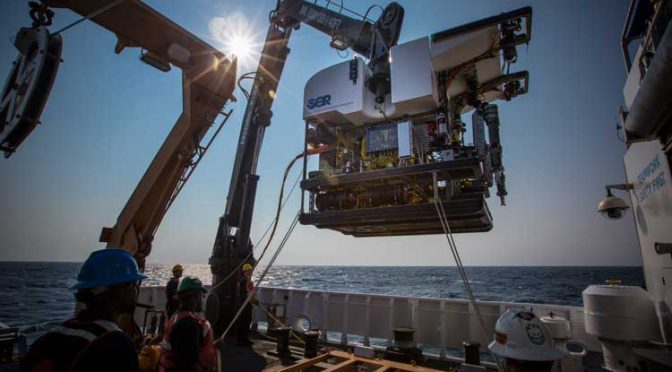
NOAA Ship Okeanos Explorer Gulf of Mexico 2017 Expedition
Welcome to the NOAA Ship Okeanos Explorer Gulf of Mexico 2017 expedition! The team will be exploring the Gulf of Mexico from November 29 – December 21, 2017, using multibeam sonar and the remotely operated vehicle (ROV), Deep Discoverer, to explore the seafloor. The 23-day expedition will focus on acquiring data on priority exploration areas identified by ocean…
-

Ocean Exploration, “Olympic-Style”
From August 18, 2017, to September 3, 2017, the E/V Nautilus will be exploring the Olympic Coast National Marine Sanctuary (NMS), located along the Olympic Peninsula of Washington state. The sanctuary encompasses 3,189 square miles (8,260 km2), an area equivalent to the states of Delaware and Rhode Island combined. It extends 25 to 50 miles…
-

Tuning into the Musician Seamounts
During their 2015 Hohonu Moana expedition, the NOAA Ship Okeanos Explorer discovered and mapped an unnamed seamount in the Central Pacific Ocean Basin (shown in the image above). The ship and scientists are now returning to this region, “Musician Seamounts”, to conduct additional mapping and remotely operated vehicle (ROV) operations over two consecutive cruises. These…
-
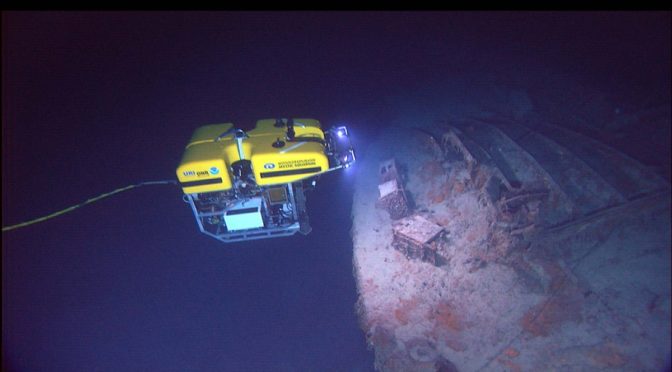
What is an ROV?
If the ocean is so unfathomably wide and deep, how can scientists possibly hope to do any more than dip our noses beneath the waves to explore? Luckily, engineers have adapted machines to reach areas of the ocean that would never be possible with a human alone. This is where remotely operated vehicles, or ROVs,…
-

Telepresence on the R/V Sally Ride
From November 28 to December 5, 2016, the Inner Space Center (ISC) supported a science verification cruise for the R/V Sally Ride, one of two, new vessels in the U.S. Academic Research Fleet. These short cruises are intended to test the ship, crew, and science systems to make sure that all are in proper working…
-
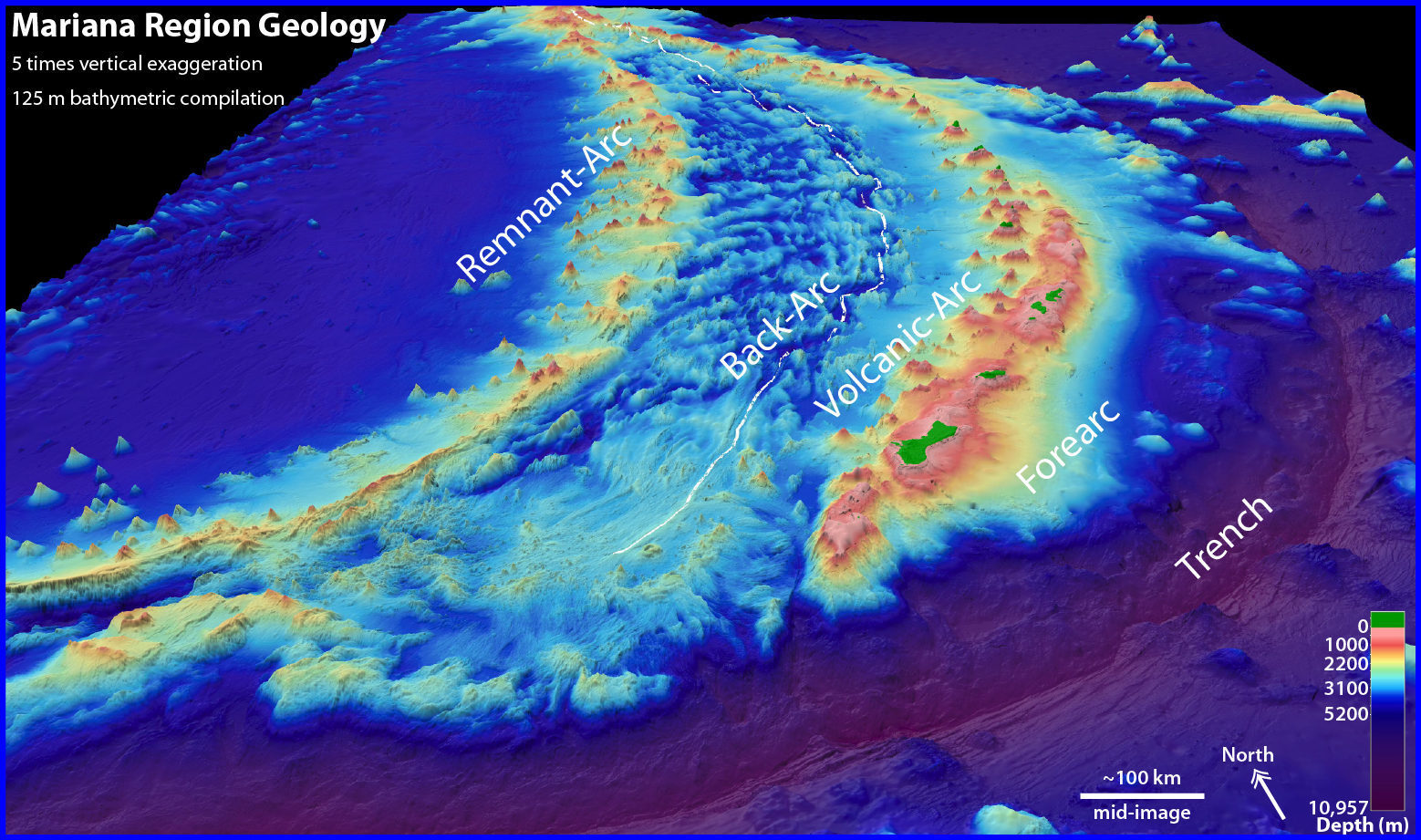
Okeanos Update: Team Dives Mud Volcanoes
In the Marianas, the west-moving Pacific plate is forced beneath the Philippine plate as they collide, a process known as subduction. As a result, the region is characterized by many geological features including fault lines, earthquakes, volcanoes, cold seeps, hydrothermal vents, and mud volcanoes.
-

Sea Star of the Show
Scientists on the NOAA Ship Okeanos Explorer were thrilled to see a species of sea star alive for the first time in history. The six-rayed sea star, Rhipidaster (confirmed over phone by Chris Mah from the Smithsonian Museum of Natural History), was found at Supply Reef, an active submarine volcano within the Marianas Trench Marine…
-

The Final Piece – Looking Forward to the Future
Before the TREET project brought the Inner Space Center and its telepresence enabled scientific research to new highs and lows, before better practices brought new evaluated methodology, before the culture of at-sea science began to craft a new image for itself, Chris German, PhD, and his team were already getting after it. What’s “it?” Read on.
-

Another Side of Science
So far in this organically growing series of exposés on the TREET project, I have covered two different perspectives, the early career scientist and the undergraduate researcher in training. I have now convinced two more invested souls to sit down with me and discuss their most fascinating theories and ideas. An expert scientist and an…